
Intergenerational activities bring older adults and younger people together for shared conversation, learning, creativity, and recreation. In assisted living, these activities can support emotional well-being, cognitive engagement, physical movement, and a stronger sense of connection to the surrounding community.
For residents in Hampton, PA, intergenerational programming may include visits from school-age children, shared projects with teenagers, family gatherings, volunteer activities, or structured events involving people of different ages. The most successful programs are planned around comfort, accessibility, consent, and genuine mutual participation.
Why do intergenerational activities matter in assisted living?
Intergenerational activities can reduce social isolation by creating regular opportunities for residents to interact with people outside their usual age group. They also give younger participants a chance to build familiarity with older adults and learn from personal experiences that may not be found in textbooks or online conversations.
The benefit is not limited to companionship. Shared activities can help residents feel useful, recognized, and connected to life beyond the assisted living setting. A resident who teaches a card game, explains a family recipe, or discusses local history is contributing knowledge rather than simply receiving care.
Younger participants benefit as well. They may develop patience, listening skills, confidence, and a more realistic understanding of aging and disability. These experiences can challenge the misconception that older adults are defined primarily by limitations.
What types of activities work well?
Activities should be simple enough to adapt but meaningful enough to encourage conversation. The best choices allow residents and younger participants to contribute in different ways.
Common examples include:
- Reading short stories, poems, or picture books together
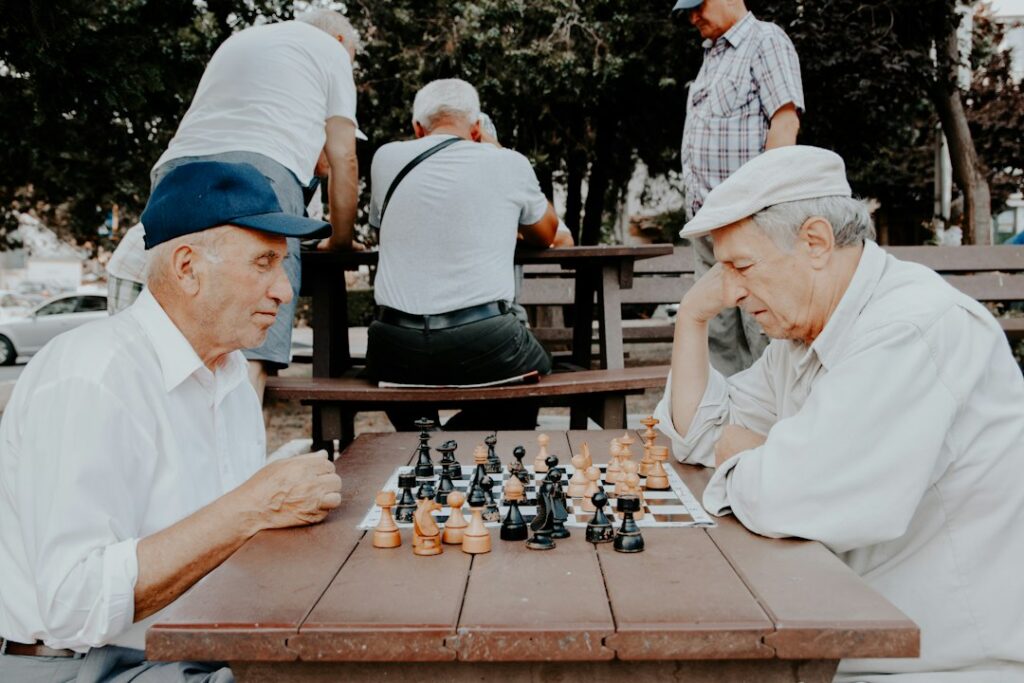
- Playing cards, board games, puzzles, or cooperative games
- Creating seasonal crafts, paintings, memory books, or photo collages
- Planting herbs or tending indoor plants
- Cooking or discussing familiar recipes, with appropriate food-safety measures
- Sharing music from different decades
- Recording oral histories or personal stories
- Practicing technology skills, such as taking photos or making video calls
- Completing service projects, such as assembling care packages or decorating cards
- Holding intergenerational exercise sessions with seated movement, stretching, or gentle dance
In a community that experiences cold winters and changing seasonal conditions, indoor projects can be especially useful during periods when outdoor travel is difficult. Warmer months may allow for supervised gardening, walks, or outdoor games if pathways, shade, seating, and weather conditions are suitable.
How do these activities support emotional health?
Regular contact with younger people can give residents something to anticipate and discuss. A scheduled visit or shared project may become a meaningful part of the week, particularly for individuals whose family members live far away or have demanding work and school schedules.
Conversation across generations may also encourage positive memories. A resident might compare past school experiences with current classrooms, explain how music or household technology has changed, or describe seasonal traditions. Recalling personal experiences can support identity and self-expression, although participation should never require someone to discuss painful memories.
Intergenerational contact can also help residents feel seen as individuals. A person living with memory loss may respond positively to music, movement, familiar objects, or a young visitor’s friendly attention even when detailed conversation is difficult.
Can intergenerational activities support cognitive function?
They can provide useful mental stimulation, but they should not be presented as a cure or guaranteed treatment for memory-related conditions. Activities may involve attention, language, planning, problem-solving, recognition, and decision-making in a natural social setting.
For example, making a simple collage requires choosing materials and arranging them. A game may involve remembering rules or taking turns. Storytelling can encourage language and recall. Teaching a younger person how to complete a familiar task may reinforce a resident’s sense of competence.
The activity should match the resident’s abilities. Too many instructions, loud surroundings, or fast-paced games can create frustration. Short sessions with clear choices often work better than lengthy events with complicated rules.
What are the physical benefits?
Many intergenerational activities include light movement without feeling like formal exercise. Residents may reach for craft materials, walk short distances, water plants, pass objects, tap along with music, or participate in seated stretching.
Movement can be particularly valuable for residents who spend much of the day sitting. However, physical activities must account for balance, fatigue, vision, hearing, mobility devices, and medical restrictions. A resident should be able to observe or participate at a lower level without feeling excluded.
Safe design may include stable chairs, uncluttered walkways, accessible tables, adequate lighting, rest periods, and assistance with transfers when needed. Staff should understand each resident’s care plan and any relevant precautions before an activity begins.
How can families support meaningful participation?
Families can help by sharing information about a resident’s interests, skills, cultural traditions, preferred music, and comfort level with children or teenagers. A relative might provide photographs, a favorite recipe, a craft idea, or a short list of conversation topics.

Visits are often more successful when expectations remain realistic. A child does not need to have a long conversation, and a resident does not need to perform or entertain. Sitting together, looking through photographs, listening to music, or completing a small task can be meaningful even if the interaction is brief.
Families should also respect a resident’s right to decline. Some residents may enjoy group events, while others prefer one-on-one visits or quiet activities. Choice is a central part of dignity.
What challenges should assisted living communities plan for?
Intergenerational programming requires more than inviting young people into a room. Differences in hearing, communication style, energy level, attention span, and mobility can affect the experience.
Helpful planning includes:
- Limiting group size when noise or crowding may be overwhelming
- Providing introductions and simple explanations before the activity
- Using large-print instructions and visual demonstrations
- Checking that the room is accessible and comfortably ventilated
- Establishing boundaries for physical contact and personal questions
- Supervising activities without controlling every interaction
- Offering alternatives for residents who prefer not to join
- Preparing younger participants for respectful communication
- Monitoring for fatigue, overstimulation, or signs of discomfort
Privacy and consent also matter. Photographs, recordings, and online sharing should only occur with appropriate permission. Residents should not be treated as educational displays or asked to disclose personal information for the benefit of visitors.
How can programs be inclusive for residents with dementia or disabilities?
Inclusive activities focus on abilities that remain available rather than on tasks a person can no longer perform. Music, rhythm, sensory materials, movement, simple choices, and familiar routines can make participation possible for residents with different communication or memory needs.
A young visitor may be encouraged to sit beside a resident, offer two activity choices, speak clearly, and allow extra time for a response. Success might mean shared attention, a smile, a gesture, or participation in one small step.
The goal is not to produce a perfect finished project. The goal is a respectful shared experience in which each person has a meaningful role.
What makes an intergenerational program successful?
Successful programs are consistent, voluntary, well supervised, and built around activities that benefit both age groups. They do not depend on occasional special events alone. Regular contact helps relationships develop naturally and gives residents a stronger sense of continuity.
For assisted living residents and families in Hampton, intergenerational activities can connect daily life with the wider community while supporting dignity, curiosity, belonging, and shared learning. The most valuable programs make room for different abilities, different life experiences, and different ways of participating.
